Bictorys
Fintech
Figma
Linear
Notion
Service Design
Design System
UX Research
B2B SaaS
Mobile Money
Project Overview
Bictorys : Omnichannel payment solution for West African merchants
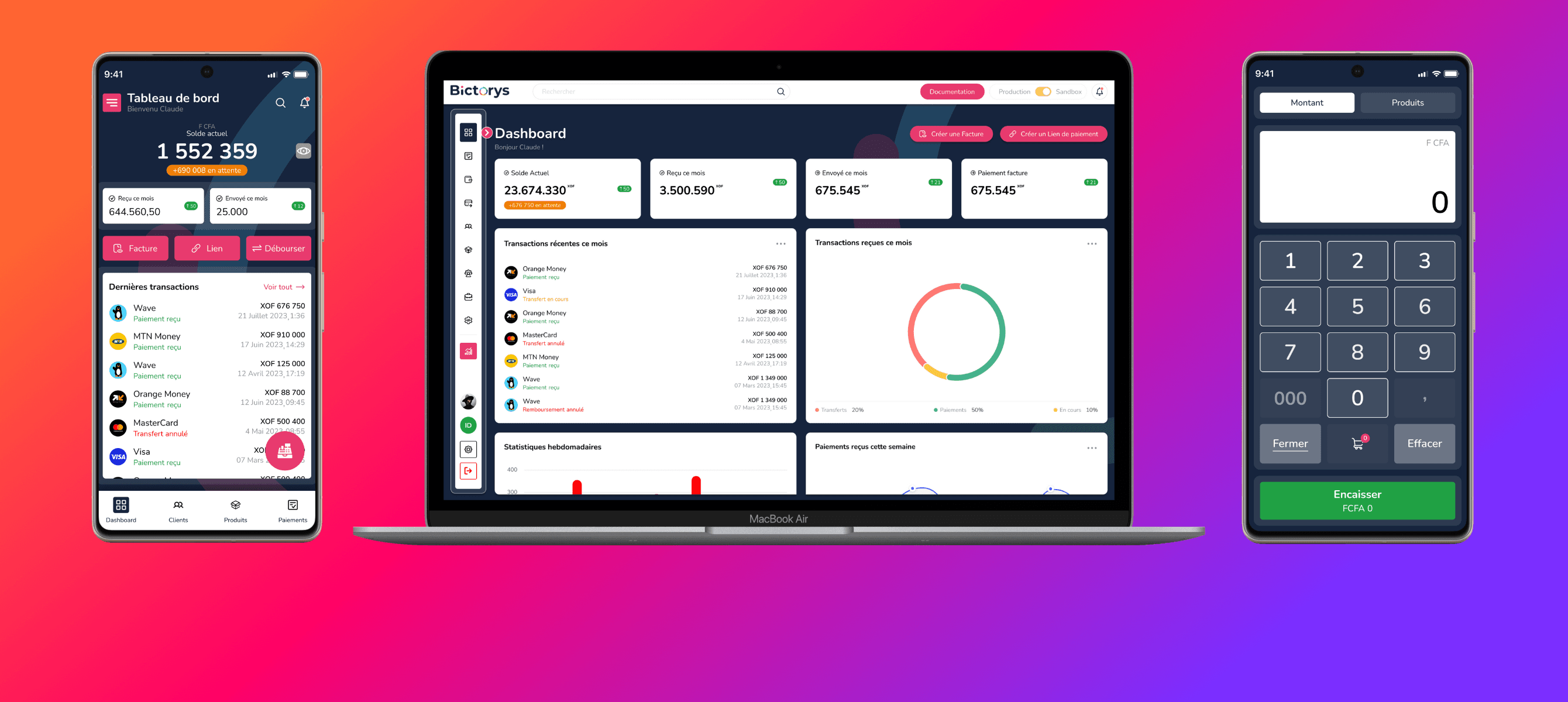
Bictorys is an omnichannel payment facilitator enabling merchants to accept payments in-store, online, and remotely via cards and mobile money (Orange Money, Wave, etc.) across West and Central Africa.
The ecosystem involves merchants, customers, banks, mobile money operators, regulators, and internal ops teams, creating high service complexity.
+440% transaction volume
25% faster product iteration cycles
Significant reduction in support tickets
Project Objective
Bictorys aims to reshape the digital payments landscape in West Africa by solving the core operational and trust issues that prevent merchants from adopting digital payment tools at scale.
Core objectives
Increase merchant acquisition and daily adoption
SMEs rely on fragmented tools (mobile money apps, bank portals, manual cash tracking). Bictorys needed to offer a single, simple workflow that merchants could adopt and use every day.
Reduce transaction failures, support load, and reconciliation costs
High failure rates, unclear statuses, and inconsistent operator behaviors created major operational overhead. The goal was to reduce friction, increase trust, and sustainably grow transaction volume.
Enable scalable, compliant expansion
The platform needed to meet BCEAO requirements, support robust KYC, and rely on scalable foundations to expand into new markets (e.g., Côte d’Ivoire, Mali).
Deliver a true omnichannel payment experience
Payment links, QR codes, mobile money, cards, wallets, and invoicing needed to work seamlessly in one platform to attract larger merchants and partners.
Build a trust-first brand through UX and product behavior
In fintech, trust is non-negotiable. Bictorys had to communicate reliability through clarity (statuses), transparency (tracking), and predictable system behavior (notifications, confirmations).
Context :
The African Payment Landscape
Mobile Money fragmentation
Mobile money schemes and PSPs (e.g., Orange Money, MTN MoMo, Airtel Money, Wave, Free Money) differ in APIs, user flows, confirmation delays, and failure modes—making standardization difficult.
Low card penetration and high POS costs
Card acceptance remains limited in many SME segments, while POS rollout and maintenance can be costly and operationally heavy.
Frequent transaction failures
Network latency, partner downtime, and asynchronous callbacks create failed or long-pending transactions that are hard for merchants and customers to interpret.
Lack of interoperability accros channels
Payment rails do not interoperate, forcing merchants to manage multiple tools, dashboards, and reconciliation processes.
Low digital maturity among merchants
Many merchants have limited familiarity with dashboards, reconciliation, dispute handling, and reporting , requiring a simplified, guided UX.
Weak customer experience standards
Unclear statuses, delayed confirmations, and low transparency reduce trust and directly impact conversion and support ticket volume.
My role
As Head of Product, I built Bictorys from scratch and led product + design + CX execution across web and mobile.
Responsibilities
Defined product vision, roadmap, and delivery milestones across teams (Frontend/Backend/Ops).
Led discovery (merchants + internal teams) and translated findings into prioritized epics, UX requirements, and specs.
Designed end-to-end journeys and the unified status model (Success/Pending/Failed).
Set UX standards (components, microcopy, error messaging) to reduce support dependency and increase trust.
Supported QA/UAT and post-launch iteration using analytics signals and support/ops feedback loops.
Contributed to CX assets: notification templates (SMS/email/in-app) and developer-facing documentation for integration.
Discovery
Objective
Understand why merchants struggle to trust existing payment solutions and identify how Bictorys can provide faster access to funds, clearer visibility, and a payment experience tailored to West African realities.
What I Did
User & Field Research
Interviewed SMEs, shop owners, delivery services, and Mobile Money agents
Observed real-world payment activities: pull payments, push payments, refunds, settlement checks
Internal Knowledge Mining
Interviewed Support, Operations, and FinOps teams to map recurring issues and workflow failures
Collected real operator errors, delays, reversal processes, and settlement timings
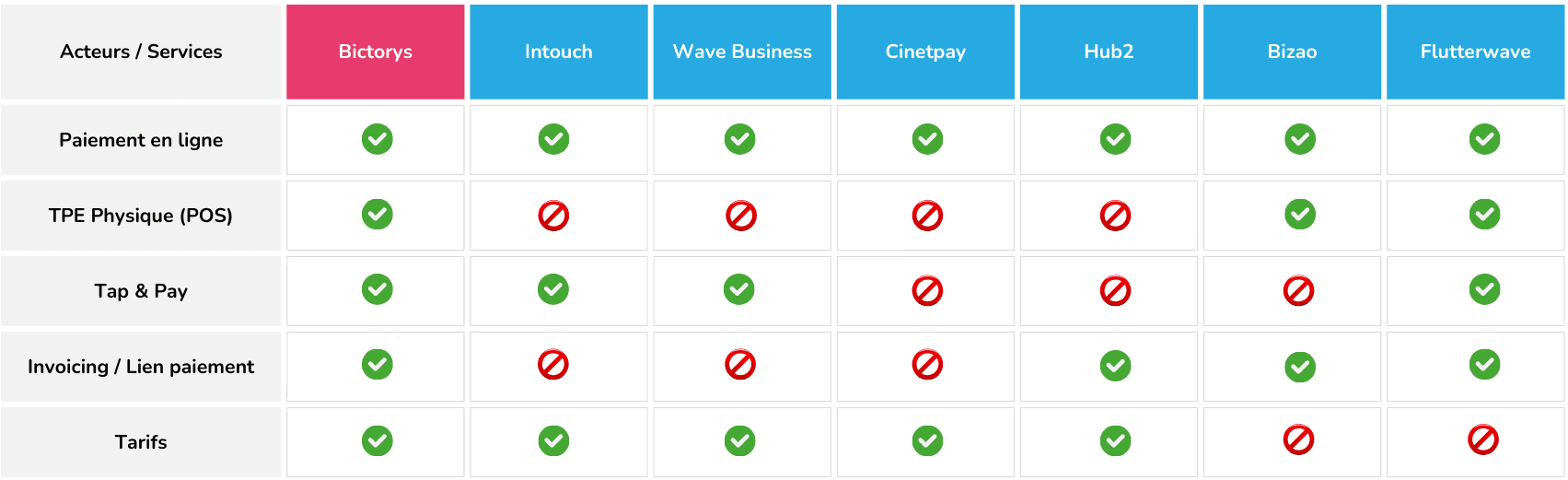
Ecosystem & Competitor Analysis
Analyzed behaviours of Wave, Orange Money, Free, MTN (latencies, fees, patterns)
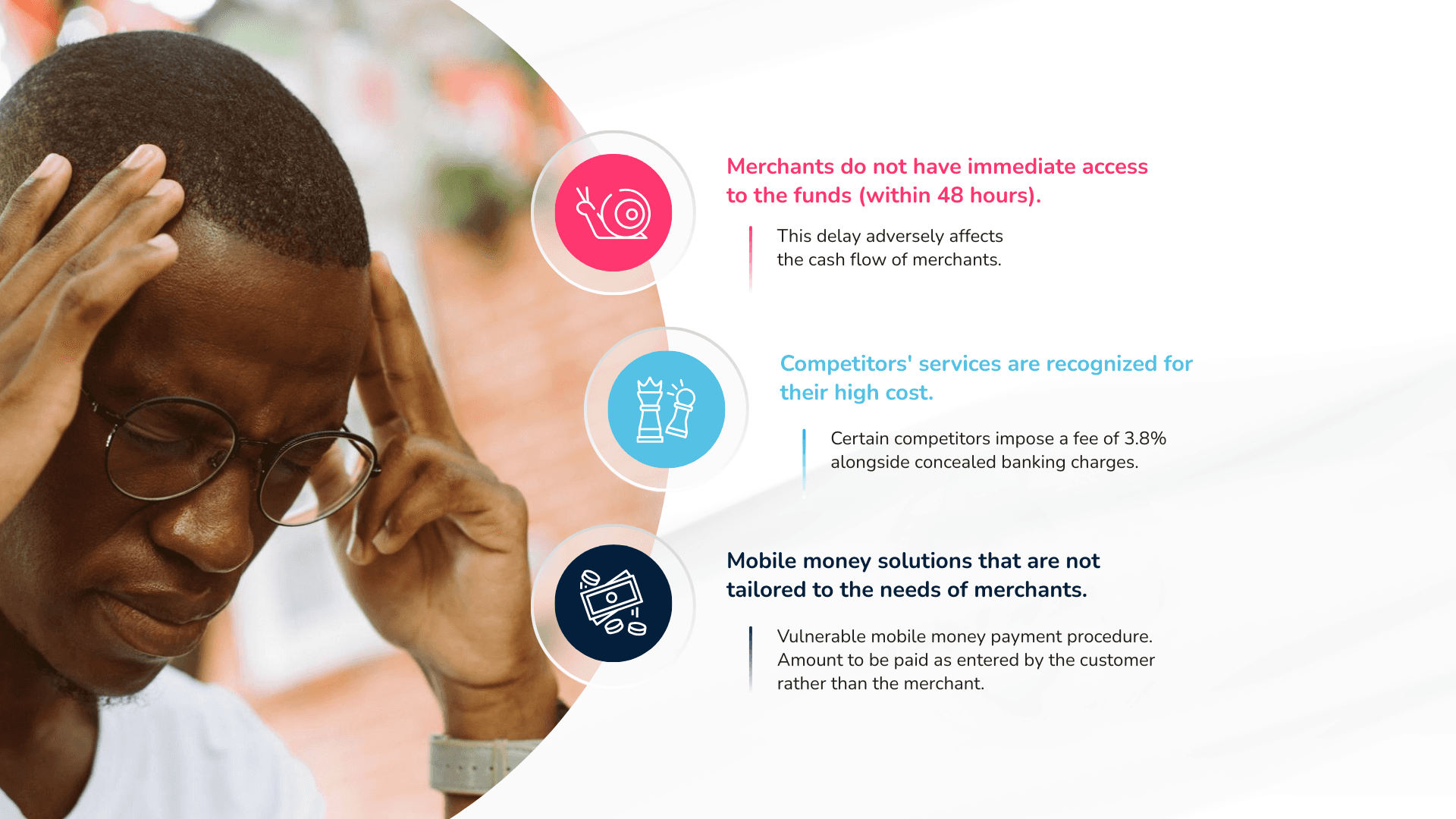
Reviewed market challenges: delayed funds (48h+), inconsistent statuses, hidden fees, fragile trust
Benchmarked African PSPs
Technical Discovery
Mapped discrepancies between operator APIs
Identified bottlenecks in settlement and reconciliation workflows
Key Findings
Slow settlements harm cash flow
Hidden fees limit trust and adoption
Mobile Money UX is not merchant-centric
Inconsistent confirmations create anxiety
Merchants want one unified dashboard
Simplicity is mandatory due to low digital literacy
QR code payments enable fast, reliable checkout and cash-in
Support fills UX gaps instead of scaling operations
Problem definition
Core Problem
Because mobile money systems are fragmented (Wave, Orange Money, Free Money, MTN Money…), each with different flows, errors, timings, and messages, merchants must navigate multiple dashboards and rely on delayed SMS confirmations. They lack clear visibility on payment status, settlement timing, and errors.
As a result, trust in digital payments is low, support teams are overloaded, and merchants struggle to run their business efficiently.
Consequences
Low trust in digital payments
Heavy support and reconciliation workload
Merchants struggle to operate efficiently day-to-day
Solution
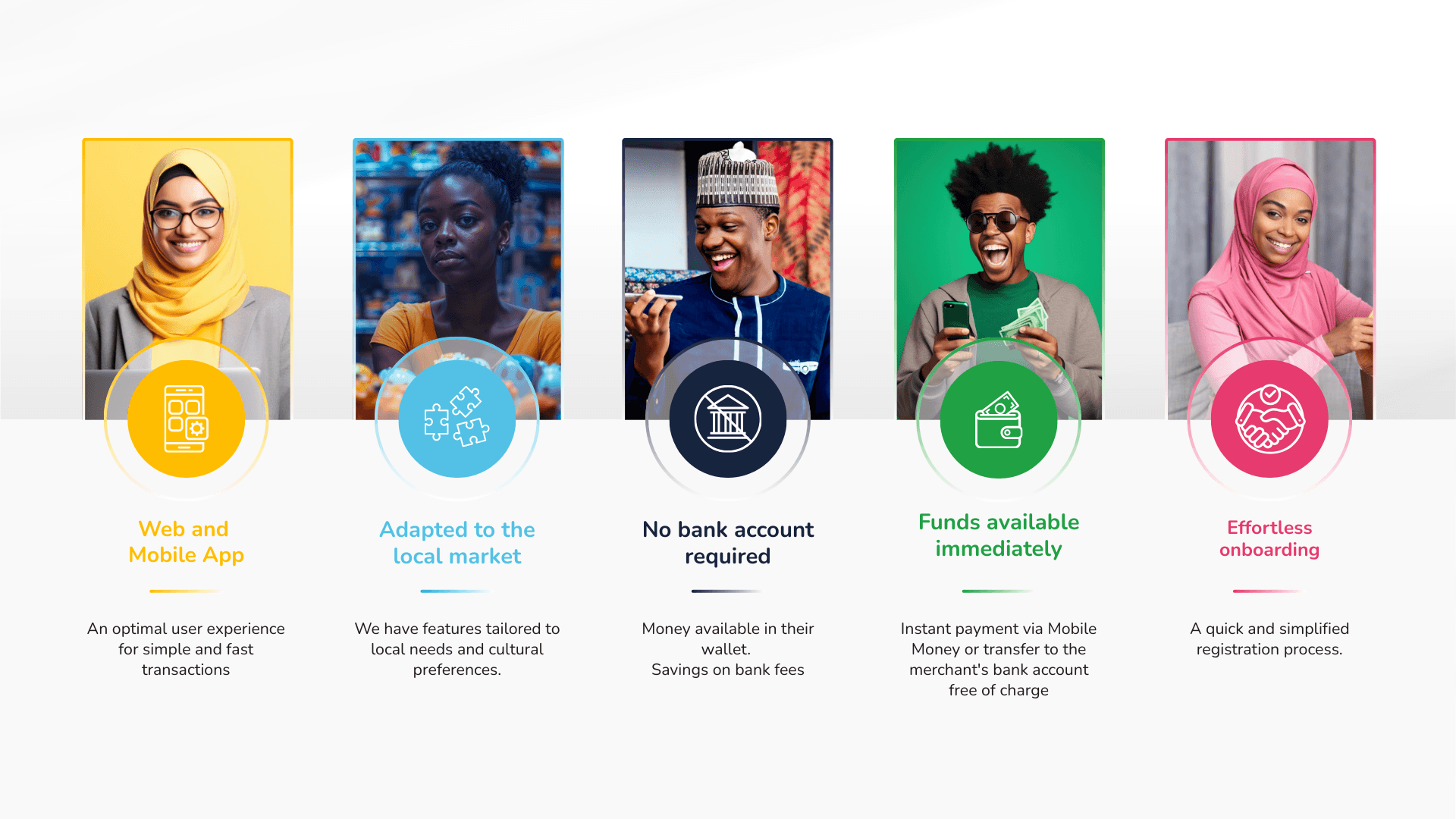
Web and Mobile App
An intuitive and consistent experience across web and mobile, designed for fast, simple, and reliable transactions anytime, anywhere.
Adapted to the Local Market
Payment features built around local habits, languages, and Mobile Money usage, tailored to the realities of West African merchants.
No Bank Account Required
A wallet-first experience that allows merchants to receive, store, and manage funds without needing a traditional bank account.
Funds Available Immediately
Instant payments via QR code using Mobile Money and Bank Cards, or direct transfer, with clear visibility on balances and fund availability.
Effortless Onboarding
A quick and simplified registration and KYC process, designed to be accessible even for users with low digital literacy.
Concept & Structure
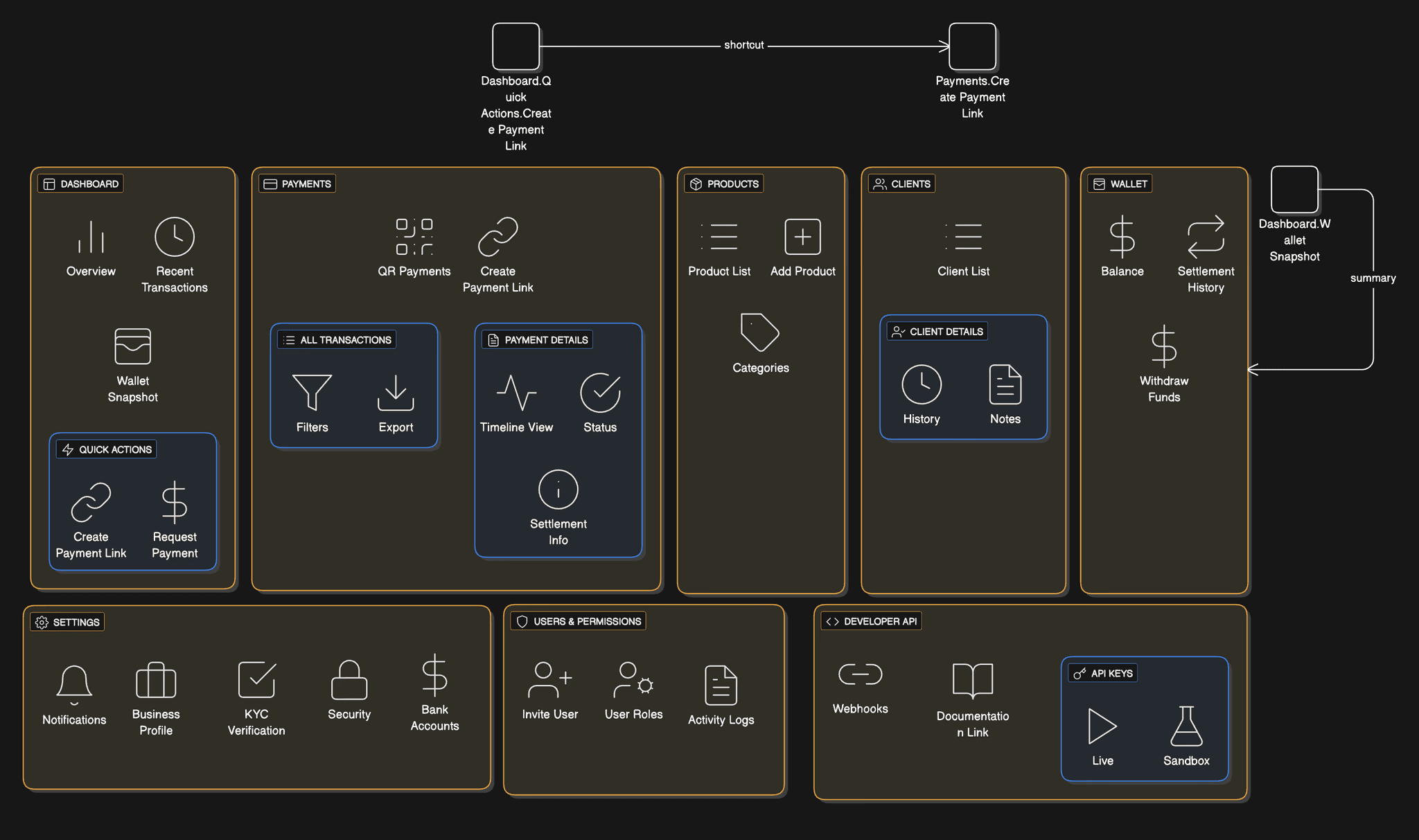
Information Architecture
Designed a lightweight structure aligned with merchant mental models:
Dashboard • Payments (Payment link, Invoices, Virtual Terminal) • Wallet • Clients • Products • Users • API • Settings
Core UX Concept
The UX concept of Bictorys is built around unifying fragmentation and reducing uncertainty in the African payment ecosystem.
Instead of forcing merchants to navigate multiple dashboards (Wave, Orange, Free, MTN…), interpret inconsistent SMS confirmations, or rely on opaque operator processes, Bictorys provides a single, coherent payment experience across all channels.
The experience is anchored on:
One unified dashboard for all payment methods
Mobile Money, bank cards, QR code payments, virtual terminal (POS-like payments), invoices, and cash-in flows are managed from one place.
One universal payment language
A consistent status model — Success / Pending / Failed — applied across all channels and operators.
One transaction narrative
Each payment is explained through a visual timeline (initiated, operator processing, confirmation, settlement), making backend processes understandable.
One clear merchant wallet
A transparent view of balances, pending amounts, settlements, and availability of funds.
Fast checkout through QR Code & Virtual Terminal
QR Code payments enable instant, error-free checkout and cash-in without manual amount entry.
Virtual Terminal (POS-like) allows merchants to initiate payments directly for card or Mobile Money when needed.
One localized onboarding experience
Simplified onboarding and KYC flows adapted to local contexts and digital literacy levels.
UX Flow Mapping
Because Bictorys clarifies how users interact with the system, the payments, how money moves, and how the system should communicate at every step.
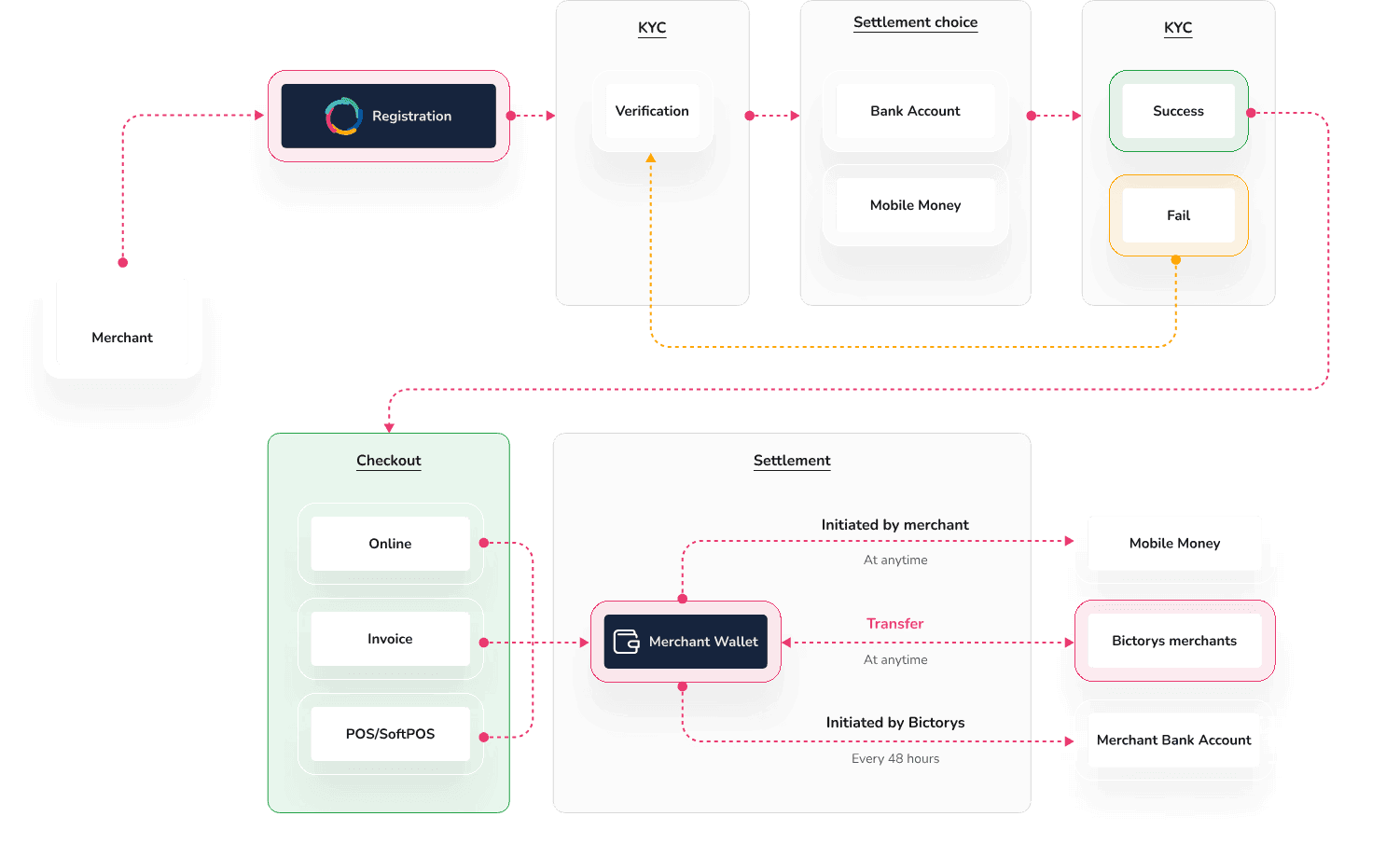
End-to-End Merchant Experience Flow
Unified Payments Dashboard (*)
One Universal Payment Language
One Transaction Narrative
One Clear Merchant Wallet
Fast Checkout with QR Code & Virtual Terminal (**)
KYC Onboarding Flow (***)
Ideation
Set of few elements in my design system


(**) Payment Link
Less than 4 seconds to create and send the link
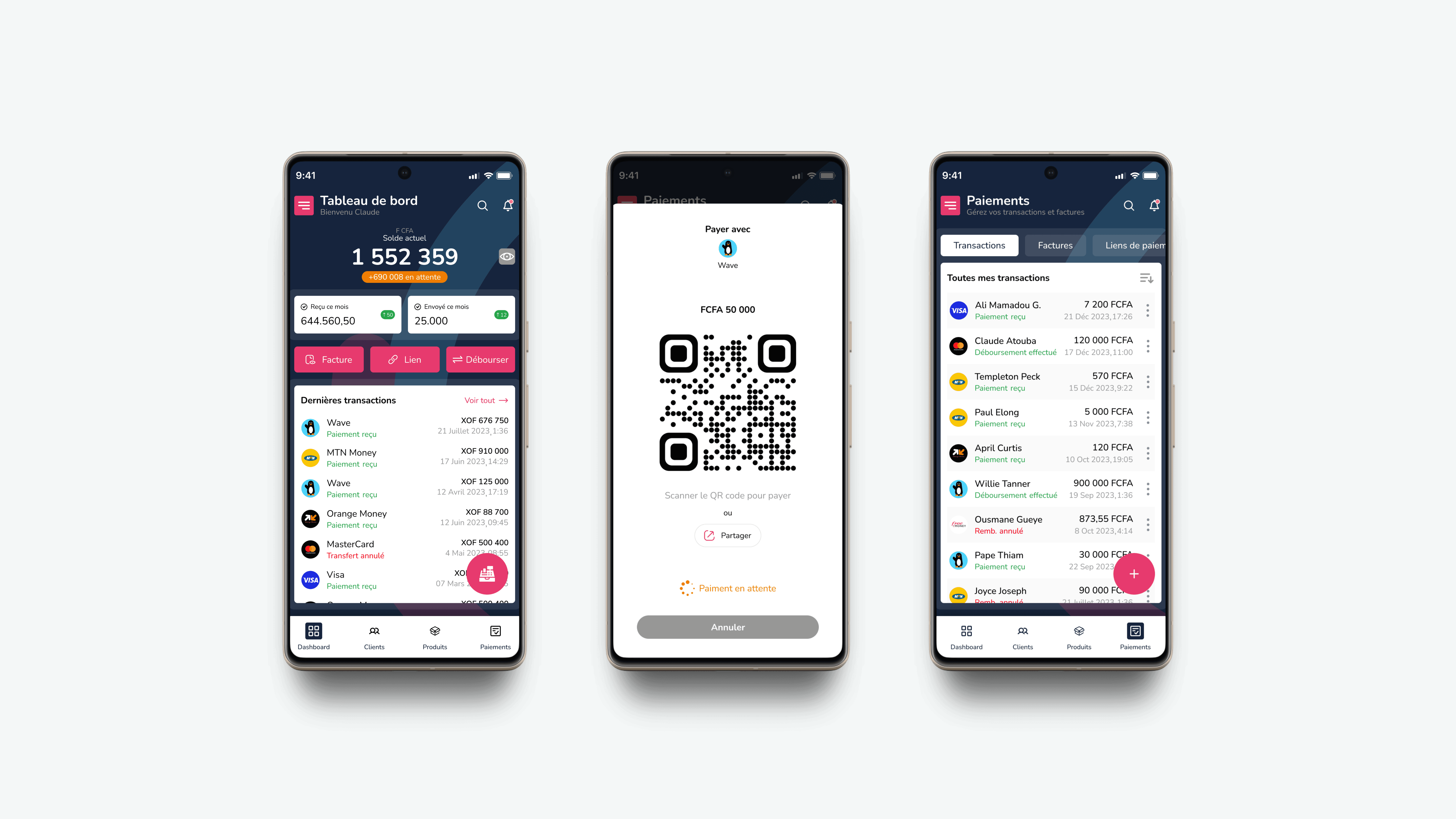
(*) Build trust with identity + KYC surface
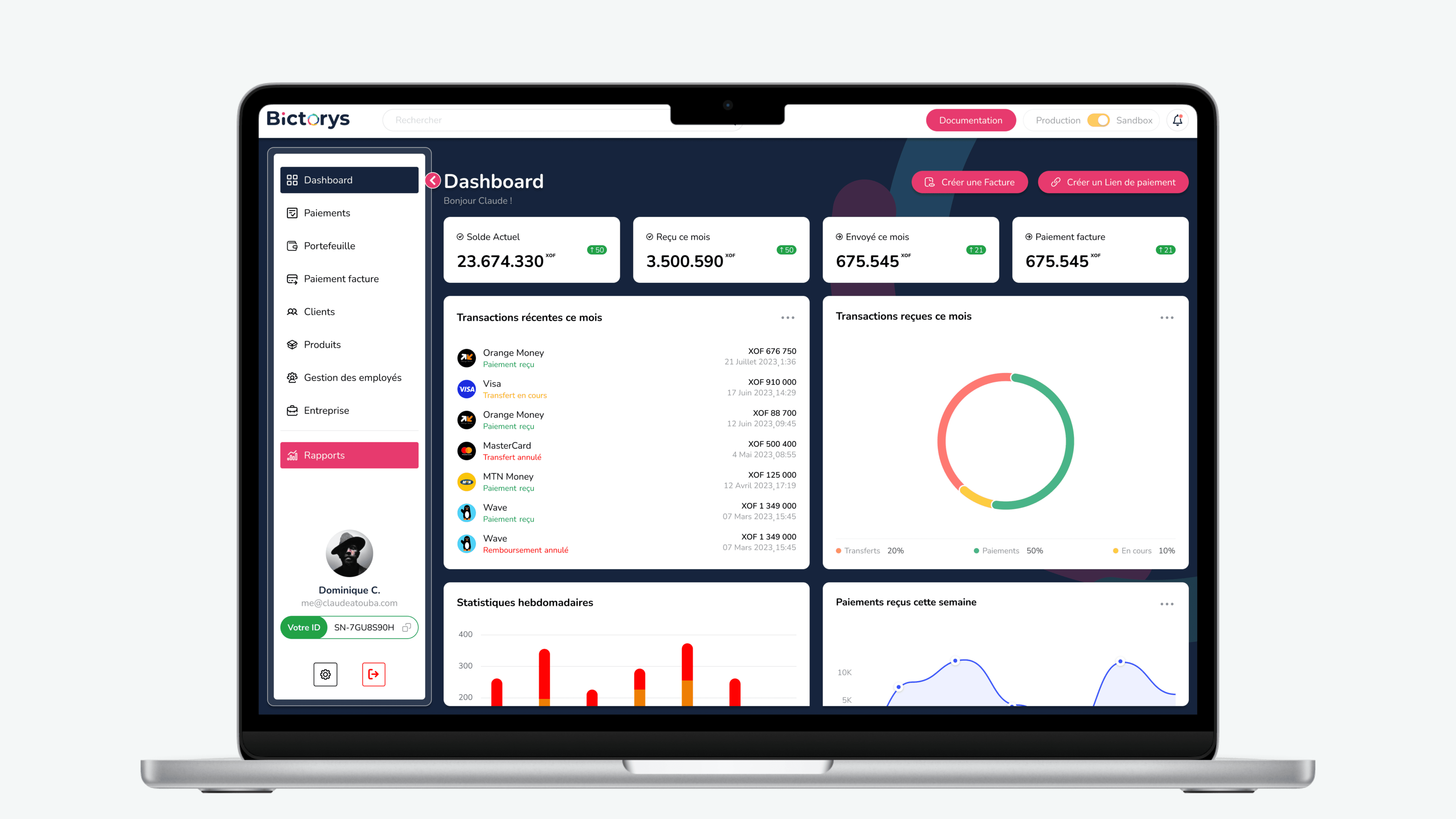
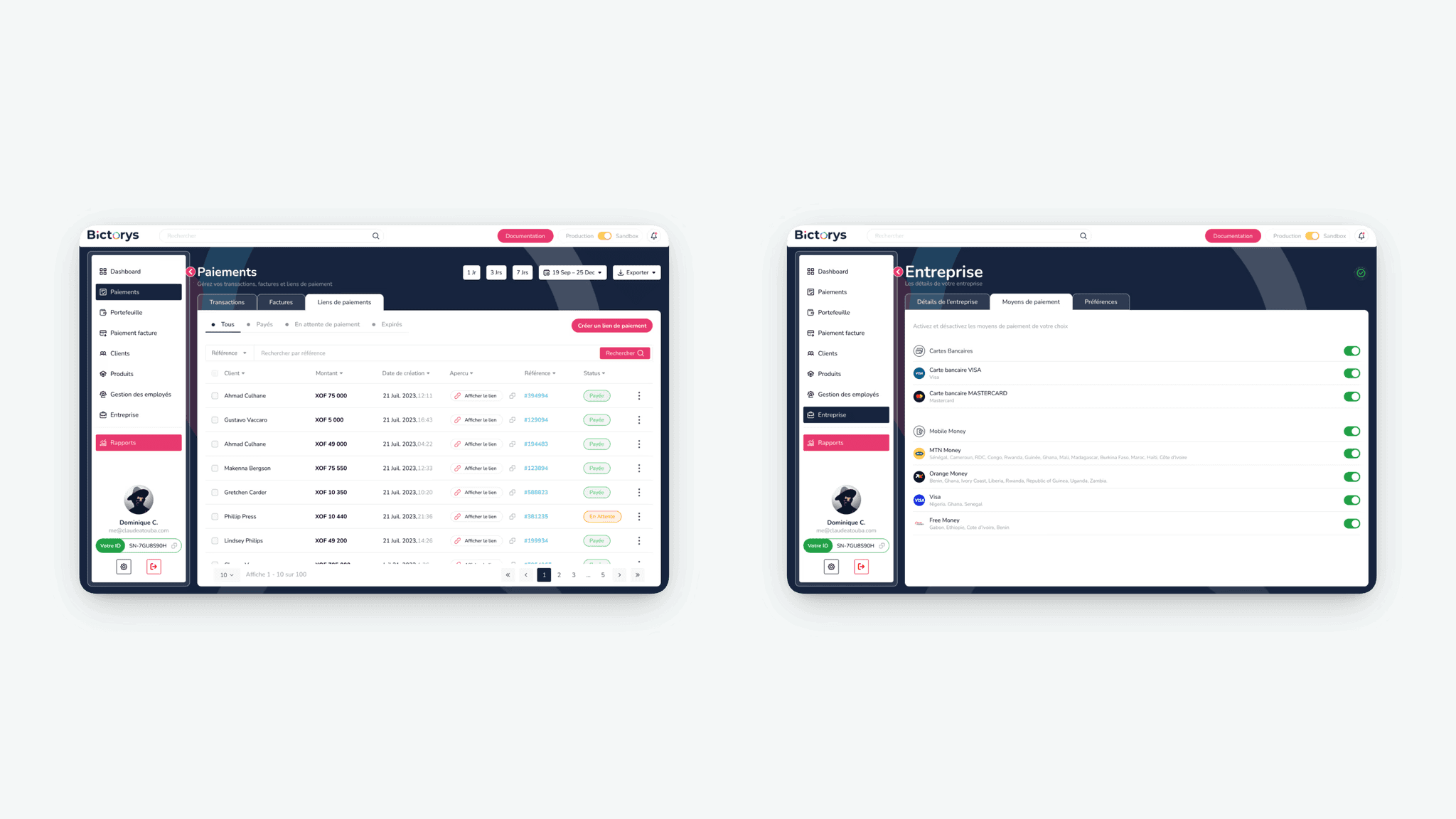
The dashboard unifies all payment channels into one clear view, giving merchants instant visibility of their money. With simplified statuses, real-time insights, and quick-access actions, it reduces complexity and builds trust, especially for users with low digital literacy.
Validation
How we tested
Merchant walkthroughs (remote & in-person)
Internal testing with Support & FinOps
Iterations based on comprehension tests
Key Improvements from Testing
Simplified status terminologyReordered dashboard elements by user priorityEnhanced transaction detail with clearer wordingReduced friction in onboarding stepsImproved empty and error states
CX Contribution
Although my primary role was UX/UI, I also improved CX by:
Writing
clear, human notification templates(SMS, email, in-app)(*)Designing the Transaction Timeline to reduce uncertainty
Standardizing terminology for Support, Ops, and UI
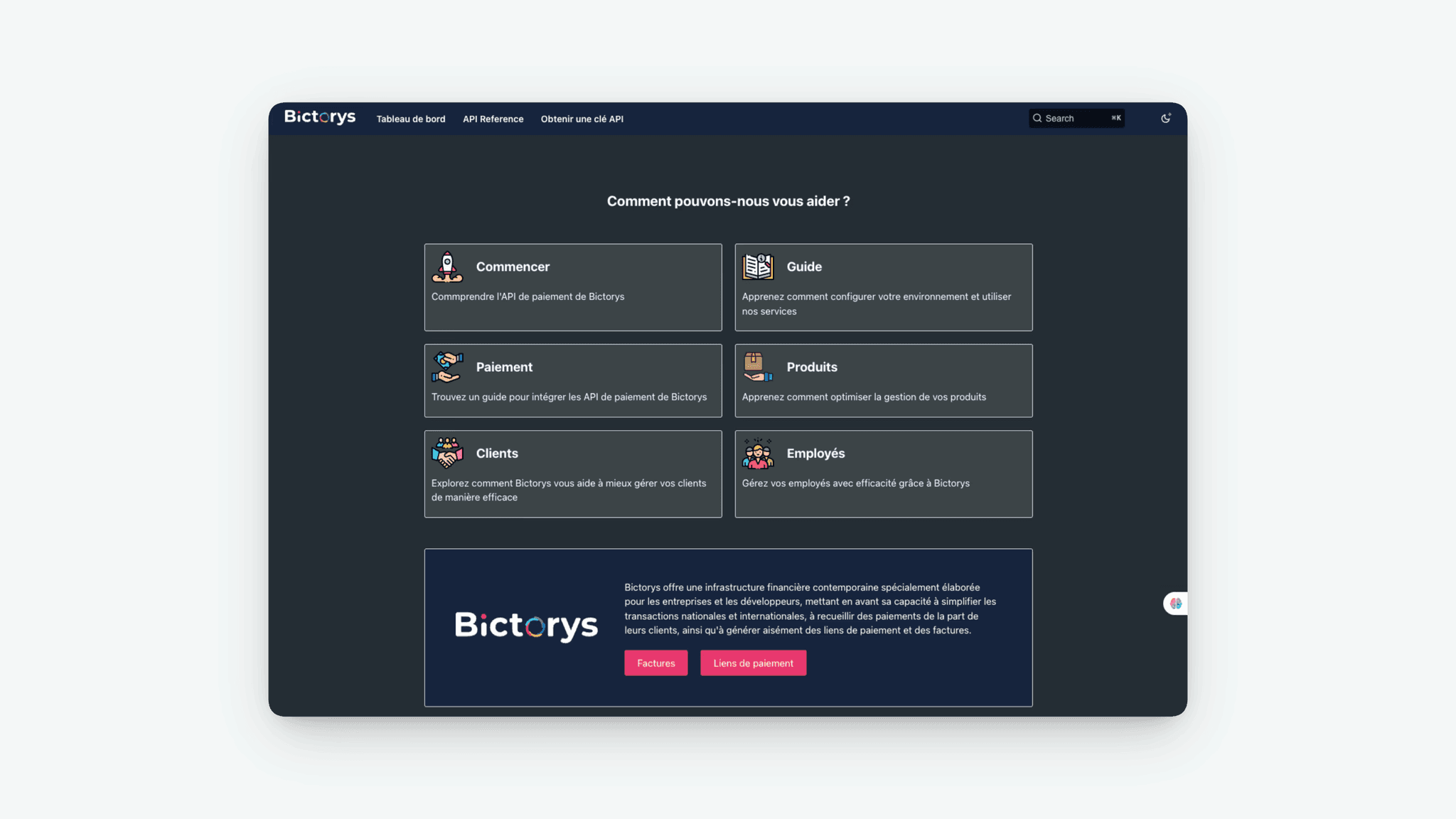
Contributed on Documentation for Developers to ease onboarding and API integration (**)Creating clear error explanations (instead of operator codes)
Result:
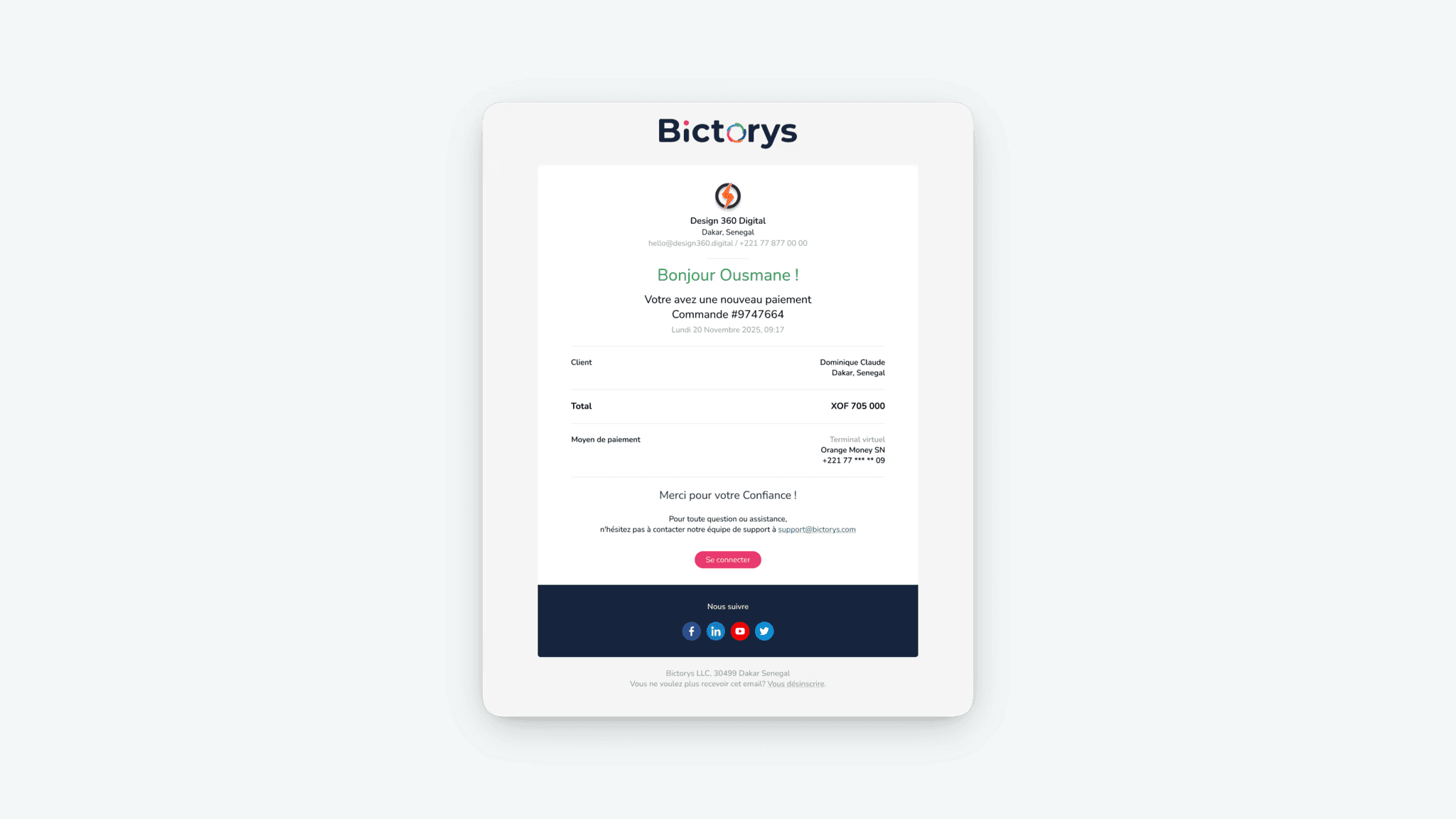
(*) Email template
Clear, simple and intuitive
(**) Documentation
Impact
User Impact
Clearer understanding of money movement
Lower stress around payments
Faster task completion
Business Impact
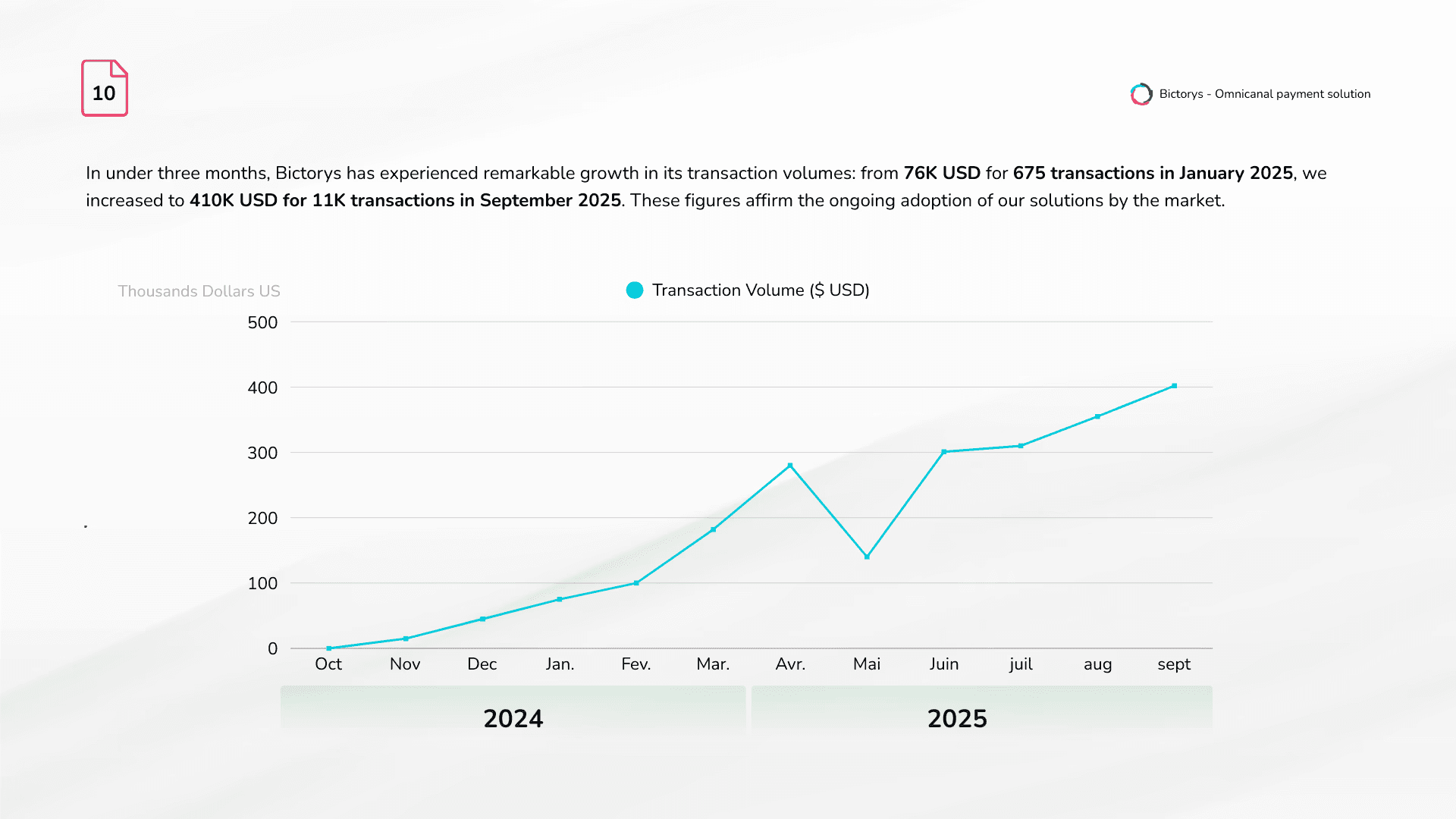
+440% increase in transaction volume
25% faster product iteration cycles
Significant reduction in support tickets
Stronger brand credibility
Bictorys led to a 440% increase in transaction volume and over 15× more monthly transactions within nine months. This growth demonstrates how clarity, transparency, and a unified dashboard directly improved merchant trust and adoption.
< Previous Project